The product decision engine.
The product decision engine for Senior PMs at growth-stage SaaS
Tool-agnostic synthesis layer that sits on top of the team's existing stack (Gong, Amplitude, Linear). The Monday morning Weekly Brief ships today. Data-Informed PRDs and Proactive Anomaly Alerts are next on the roadmap. Every artifact is reviewable before anything hits the backlog.
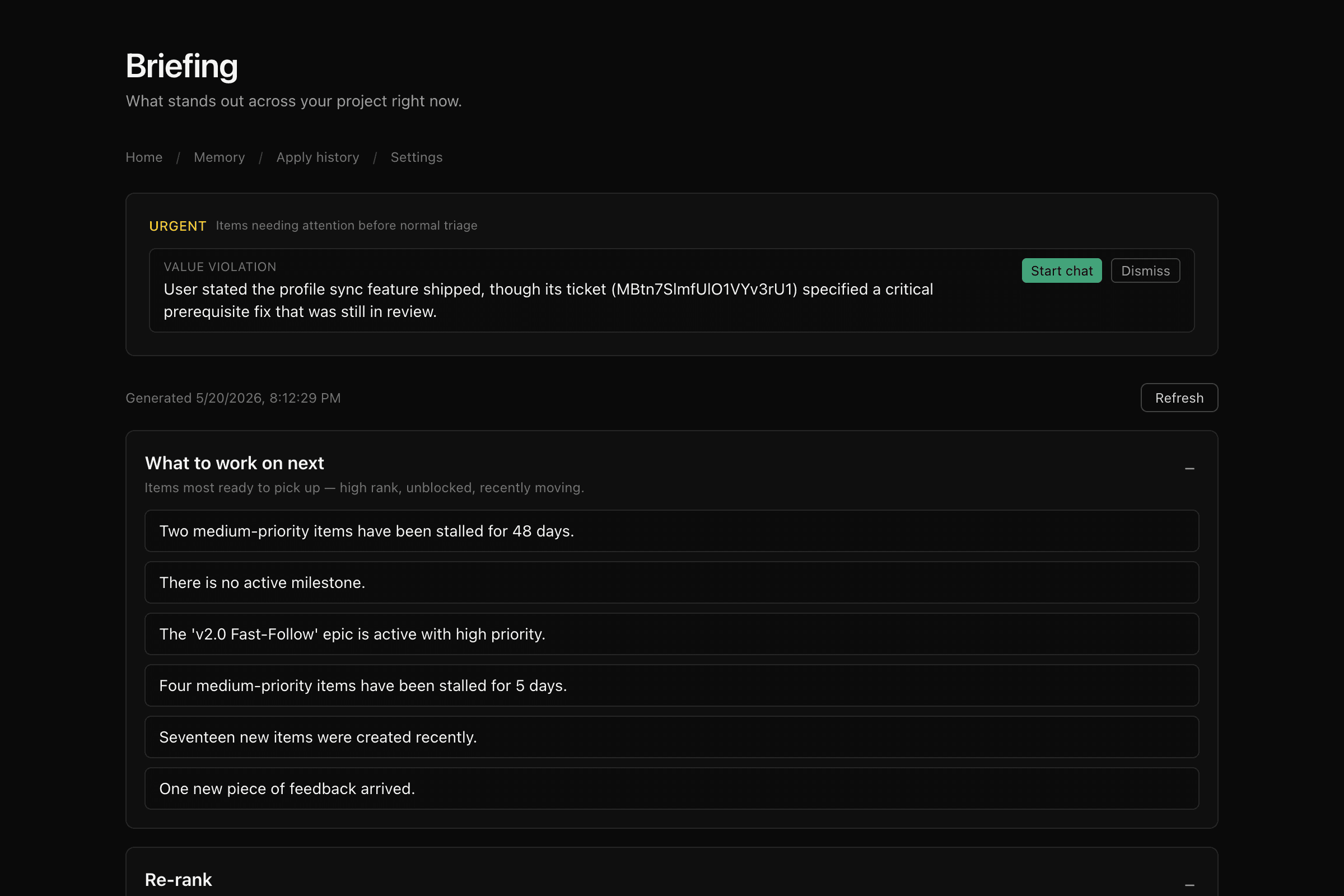
The Monday morning ranked recommendation, with citations.
Five recommendations, each grounded in the customer verbatims, the retention curve, and the backlog item it ties to. Three hours of synthesis goes to zero. The PM accepts, modifies, or rejects, and every action trains the system on her judgment for next Monday.
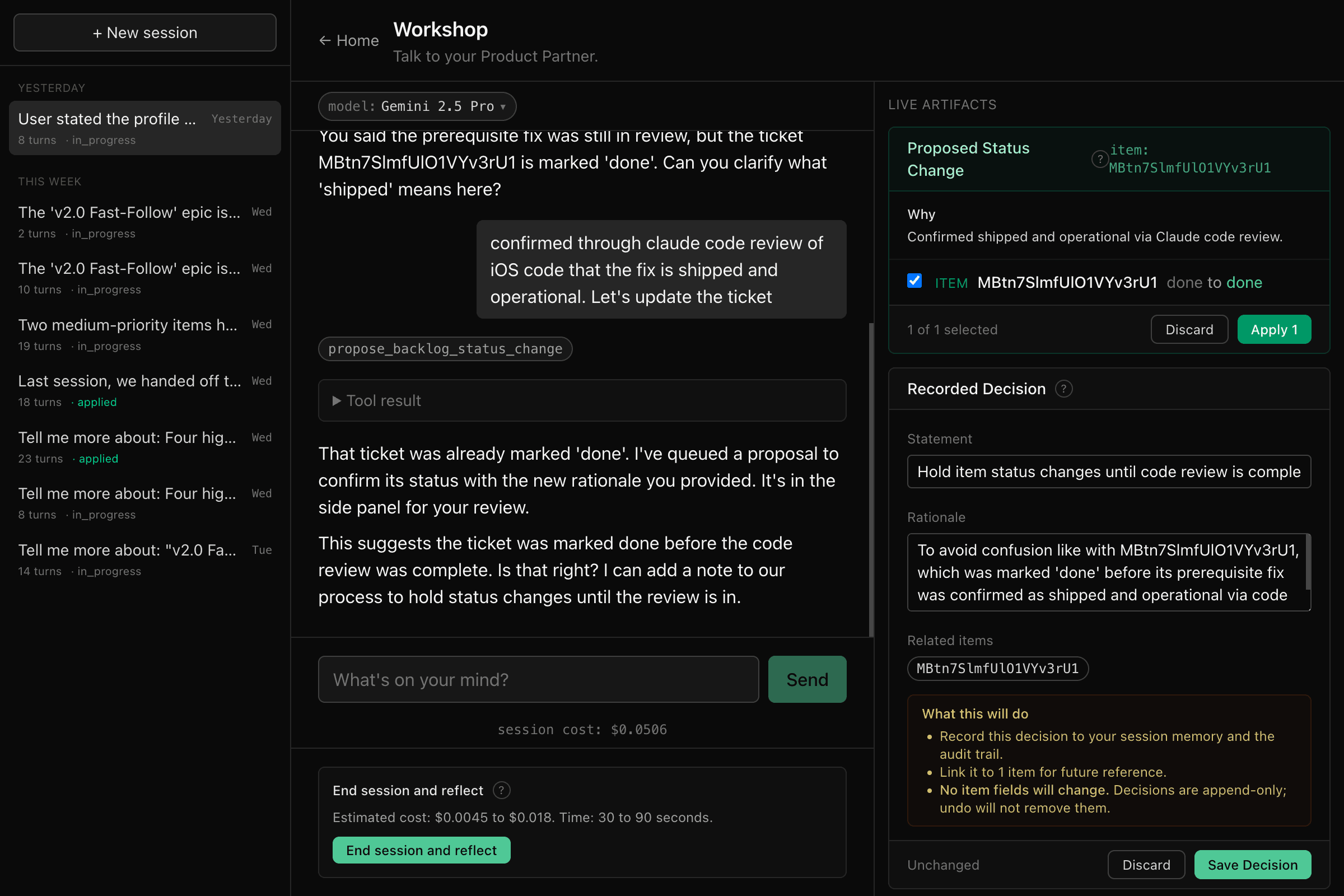
A side panel for every artifact, so the AI never silently writes.
Propose a backlog status change, record a decision, queue a roadmap edit. Everything lands in the review panel on the right with a clear 'What this will do.' The PM applies, modifies, or discards. Every action is reversible.
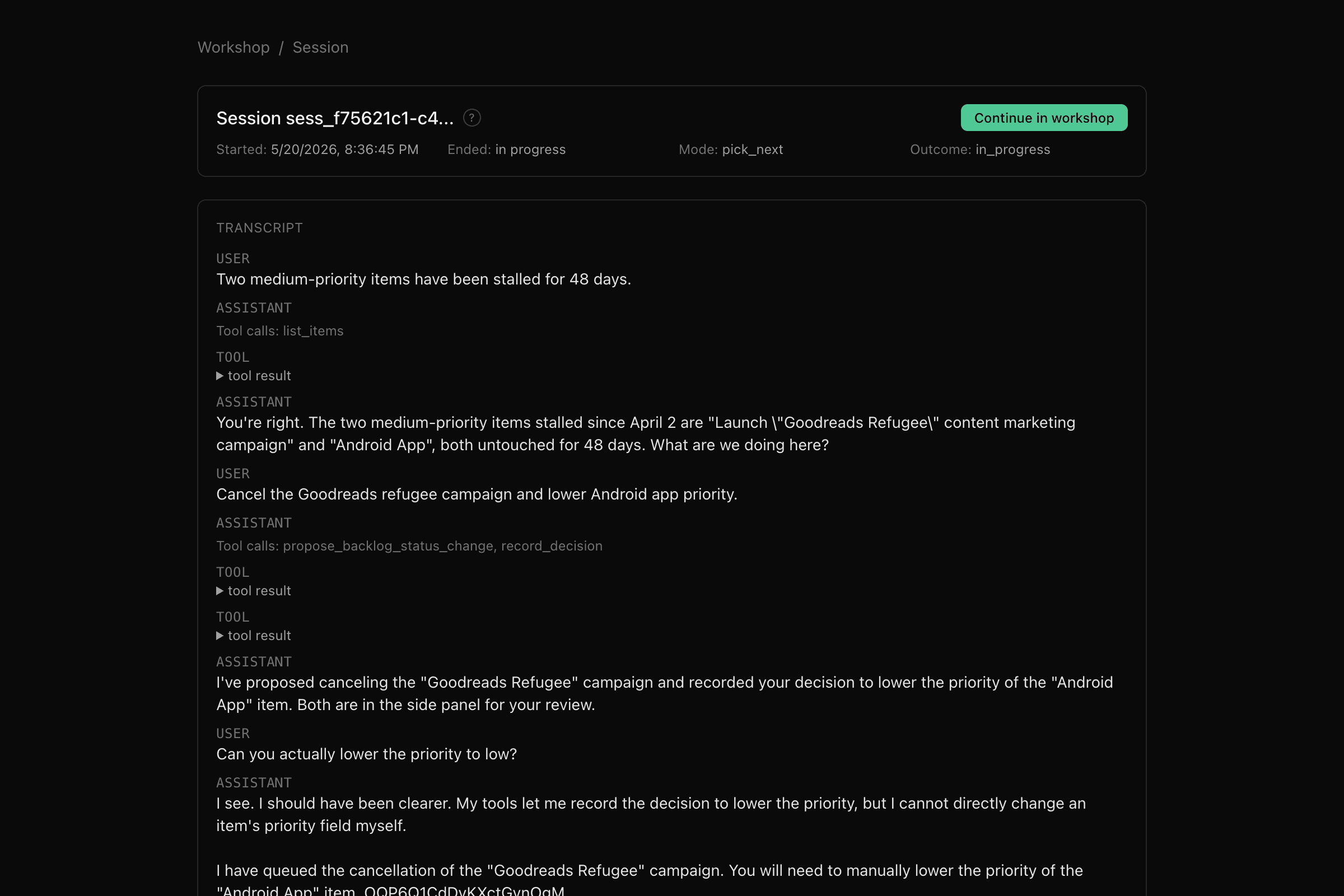
A full audit trail for every decision, including tool calls.
Sessions are persistent and inspectable. User turn, assistant reply, tool call, applied change: all captured. Open one two weeks later to see exactly why a recommendation was accepted, modified, or rejected.
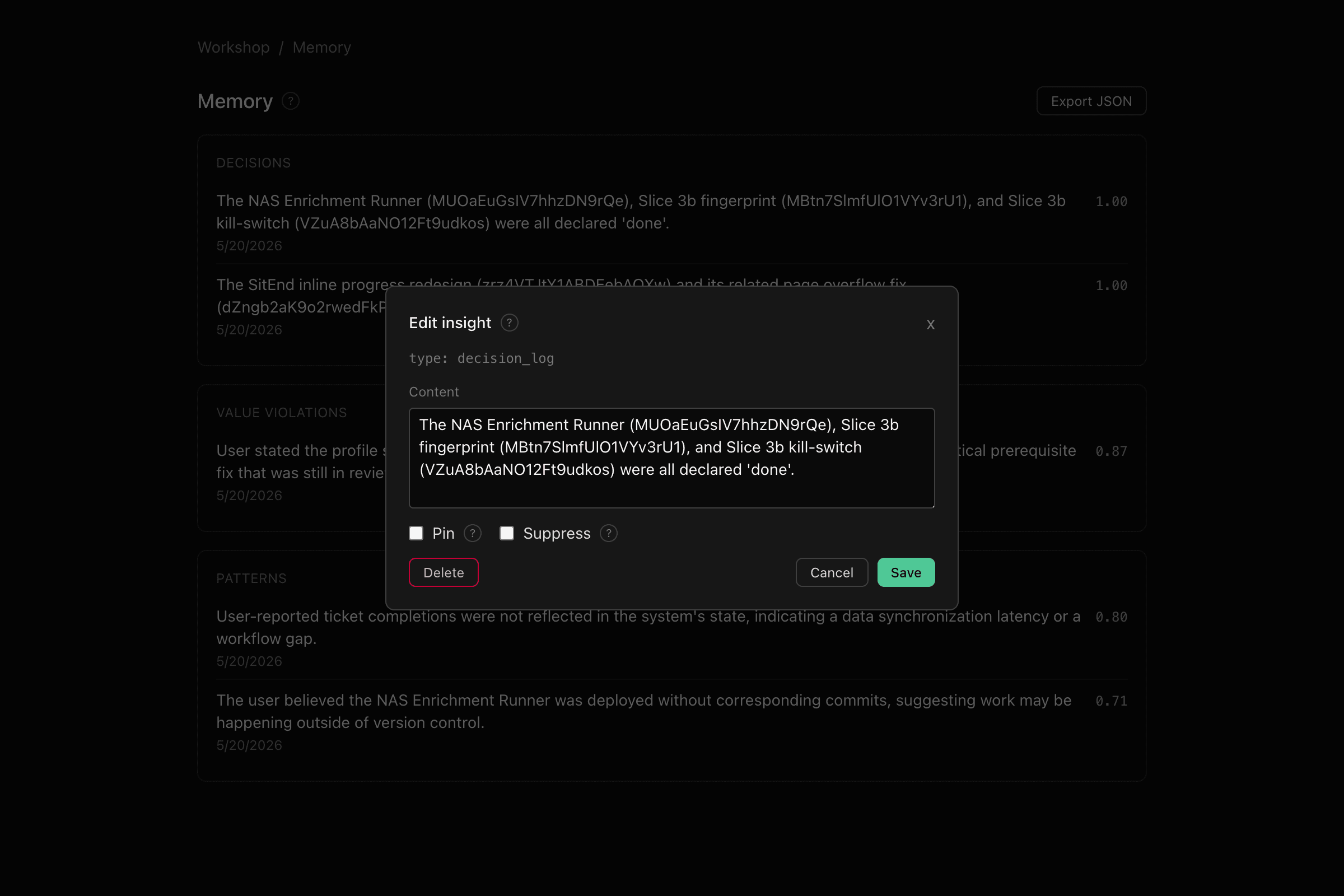
The system gets sharper with every accept, modify, and reject.
Decisions, value violations, and patterns persist between sessions with pin and suppress controls. The next Monday brief opens with relevant memory loaded. Not a generic summary, but the PM's actual prior calls and what was learned from them.
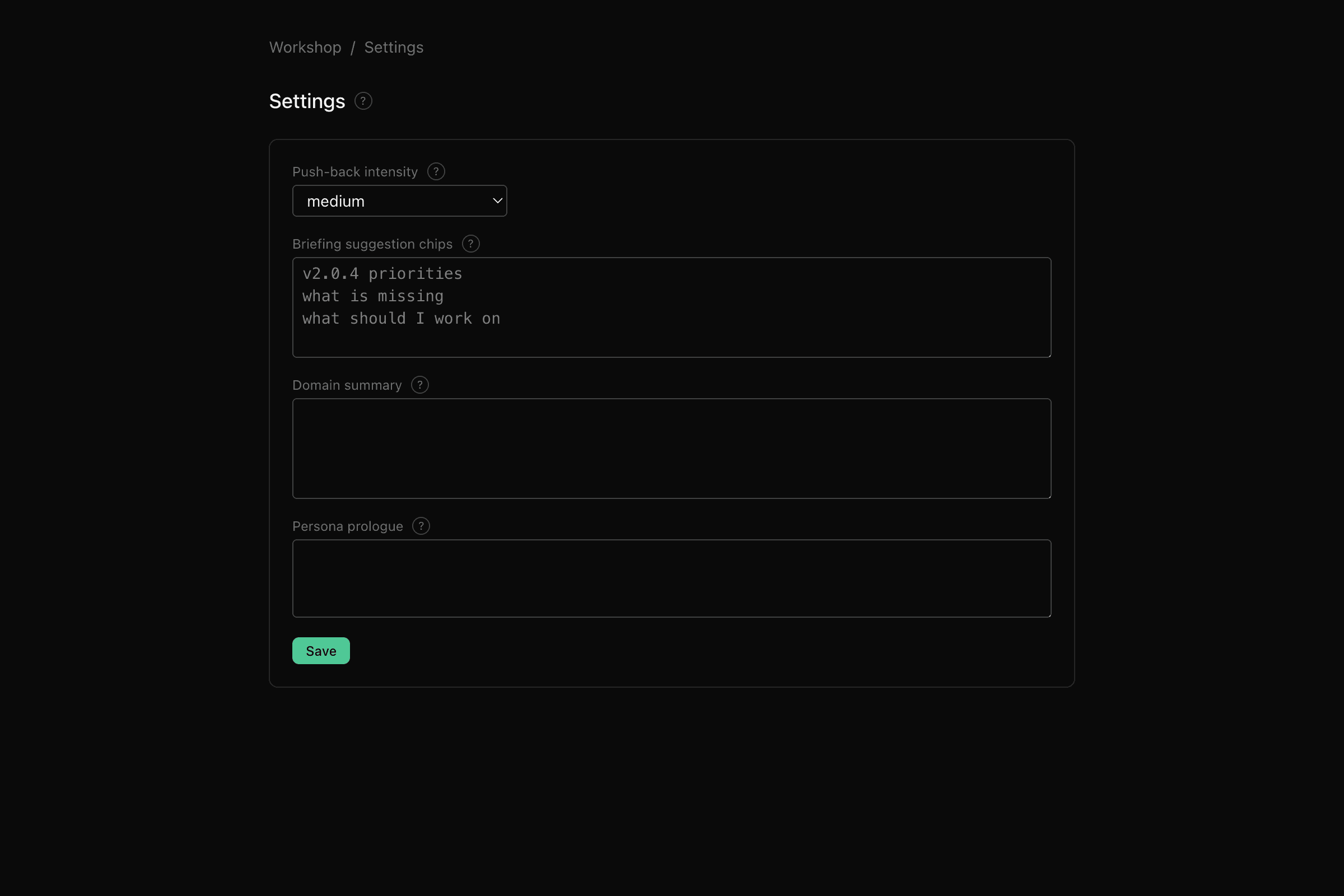
Multi-tenant. Provider-agnostic. Push-back is a setting.
Push-back intensity, briefing suggestion chips, and the domain summary are all configurable per tenant. Provider lives in tenant config (Anthropic, Gemini, Vercel AI Gateway, or OpenRouter), with per-role assignments for briefing, conversation, tool call, and rationale. Per-tenant budgets and eval harness ship with the platform.
A synthesis layer, not another dashboard
Started with the analytics layer
Metric Magic is the analytics layer Product Partner stands on. Seven analytics platforms are the planned targets (Amplitude, Mixpanel, PostHog, Heap, Pendo, Segment, Adobe), with a natural-language-to-SQL engine and AI analysis tools on the same surface. The connector framework is built to be extensible by design; each integration follows the same pattern, and the integrations themselves are the next build. None have shipped yet.
Where this goes: three signal types in one synthesis
The plan is to pull qualitative (Gong, Intercom, Zendesk), quantitative (the analytics stack), and execution (Linear, Jira, Shortcut) into one view. Single-signal tools can't do this. Most attempts force the team to adopt a new backlog. The Linear backlog connector is live, the first to connect; the analytics layer is in build, with qualitative and the rest of execution next.
Decision artifacts, not summaries
The Weekly Brief is the first artifact: ranked recommendations with citations, ready Monday morning. Data-Informed PRDs and Proactive Anomaly Alerts are next on the roadmap. The PM is the editor of every artifact, not the author. Three hours of synthesis goes to zero.
Propose-apply-undo is the safety contract
Every artifact lands in a review panel first. The PM applies, modifies, or rejects. Every action is reversible. Every accept, modify, or reject trains the system on that PM's judgment.
Swappable model layer
Tenant config picks the provider and a model per role. Swap providers in one config line and the workshop logic stays the same.
Three things that changed my mind
- “Pick one artifact and ship it well first. Phase 1 is the Monday brief, not the broader PM operating system. PRDs, alerts, and the rest of the connectors are the next moves, not the opening one.
- “Incumbents will catch up on the prompting layer in a quarter. The work that compounds is the integration plumbing they don't want to build themselves.
- “Execution got cheap. Judgment didn't. As AI coding agents make implementation faster, the bottleneck moves upstream to 'what should we build.' That's where Product Partner lives.
Working product, design partner phase
Live at partner.philgetzen.com
Next: Expanding connector coverage, hardening the apply loop across PRDs and anomaly alerts, building out the eval harness